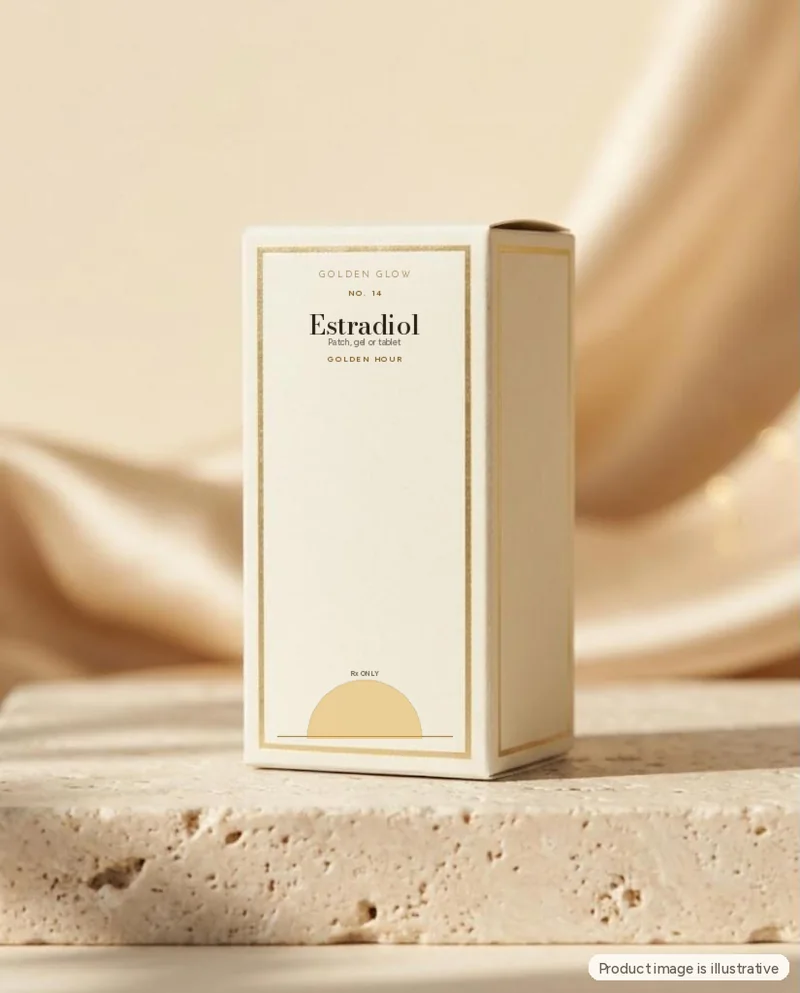
Product image is illustrative. Your medication and packaging may look different.
No. 14 · Hormones
Menopause Hormone Therapy
Estradiol and progesterone
Menopause hormone therapy uses estradiol, usually with progesterone if you have a uterus, to treat symptoms such as hot flashes, night sweats, poor sleep and vaginal dryness. The Menopause Society states that for healthy women under 60 or within 10 years of menopause, the benefits for symptoms generally outweigh the risks, and a licensed provider reviews yours first.
For hot flashes, night sweats, sleep and vaginal symptoms.
| Option | Monthly | Quarterly, 3 months | Start |
|---|---|---|---|
| Estradiol tablets | $120 | $155about $52 a month | Start |
| Estradiol patch | $195 | $375about $125 a month | Start |
| Estradiol gel 0.1% | $190 | $360about $120 a month | Start |
| Progesterone capsulesUsually needed with estrogen if you have a uterus | $140 | $210about $70 a month | Start |
| Estradiol vaginal cream 0.01% | $155 | $265about $88 a month | Start |
| Biest lotion or Biest with progesterone (compounded)Only at your licensed provider's discretion | $165 | Monthly only | Start |
Prices include the online visit, licensed provider review, medication and shipping. Quarterly plans ship three months at a time. Cancel or pause anytime. Available online in Detroit, Metro Detroit and across Michigan, and in other states where our providers are licensed.
Online visits for Detroit, Metro Detroit and Michigan. Questions first? Email support@hoolongevity.com or call (586) 321-3377.
Who it's for
- Women in perimenopause or menopause with symptoms that affect daily life
- Women under 60 or within 10 years of menopause, where the benefit and risk balance is most favorable
- Women with vaginal dryness or painful sex (low-dose vaginal estradiol)
Not for
- A history of breast or uterine cancer, blood clots, stroke or heart attack
- Active liver disease or unexplained vaginal bleeding
- Pregnancy
Your licensed provider reviews your full history and decides what is appropriate.
How it works
Complete a menopause questionnaire online, including your history and screenings
A licensed provider reviews it and chooses the form and dose, if appropriate
Your medication ships from a licensed US pharmacy, quarterly or monthly
Your provider reviews your plan at follow-ups, at least once a year
What's included
- Online visit and licensed provider review
- Medication your provider prescribes
- Shipping in discreet packaging
- Follow-up messaging with your care team
Important safety information
- Common early effects include breast tenderness, bloating, headaches, mood changes and spotting, which often settle in the first months.
- Estrogen can raise the risk of blood clots and stroke, especially as pills and when started later in life. Your provider weighs your age, timing and history.
- If you have a uterus, estrogen without a progestogen raises the risk of endometrial cancer; this boxed warning remains on systemic estrogen-alone products.
- Report any bleeding after menopause, chest pain, sudden leg swelling or stroke symptoms right away.
- Biest lotions are compounded. Compounded hormones are not FDA-approved, and The Menopause Society and ACOG prefer FDA-approved hormone therapy when a suitable product exists.
Prescription only. A licensed provider reviews your health history in an online visit and decides whether this program is appropriate for you. Tell your provider about every medication, supplement, allergy and condition, and whether you are pregnant, trying to conceive or breastfeeding. If you have a severe reaction, trouble breathing, chest pain or swelling of the face or throat, call 911.
Full details: safety information. Updated November 3, 2026.
Questions, answered
Straight answers about Menopause Hormone Therapy.
Why do I need progesterone if I'm taking estrogen?
If you have a uterus, estrogen taken without a progestogen raises the risk of endometrial (uterine lining) cancer, so progesterone or a progestin is added to protect the lining. Women who have had a hysterectomy usually do not need it for this reason. This is also why the boxed warning about endometrial cancer remains on systemic estrogen-alone products.
Does progesterone help you sleep?
Some women report better sleep on oral micronized progesterone, which can be mildly sedating and is usually taken at bedtime. Research specifically on sleep is limited, and responses vary. A licensed provider can discuss whether it fits your situation.
Is it too late to start HRT at 60 or 65?
It is not automatically ruled out, but timing matters: the FDA's updated labeling recommends starting systemic HRT within 10 years of menopause onset or before age 60, and The Menopause Society notes risks are greater when therapy starts later. Low-dose vaginal estrogen for dryness or urinary symptoms is a different situation, with very little absorbed into the bloodstream. A licensed provider can review your history to see what is appropriate.
How long can I stay on HRT? Do I have to stop at some point?
There is no single cutoff for everyone; the FDA's updated labeling notes that timing and duration are decisions made between the prescriber and the patient. The Menopause Society recommends reviewing benefits and risks regularly, at least once a year. Your licensed provider will revisit your plan at follow-ups.
How long does HRT take to start working?
Many women notice changes in hot flashes and night sweats within a few weeks, while sleep, mood and vaginal symptoms may take longer, sometimes around three months. Responses vary, and dose or form adjustments are common early on. Stay in touch with your licensed provider so your plan can be adjusted if needed.
I've been on HRT for 3 months and feel no change. Should I up the dose?
Talk to your licensed provider before changing anything, because the dose, form or timing often needs adjusting and some symptoms may have other causes. Do not change your dose on your own. Message your care team or book a follow-up to review your plan.
Does HRT make you gain weight?
Research has not shown that hormone therapy itself causes weight gain; the weight and belly fat changes many women notice in midlife are linked to aging and the menopause transition. Some women notice temporary bloating when starting. If weight is a concern, raise it in your visit so your licensed provider can look at the whole picture.
Is vaginal estrogen safe? Does it carry the same risks as regular HRT?
Low-dose vaginal estrogen acts mainly where it is applied, with very little reaching the bloodstream, which is why The Menopause Society supported removing its boxed warning. It is used for vaginal dryness, painful sex and some urinary symptoms. A licensed provider can tell you whether it is appropriate, including if you have a history of breast cancer.
Will HRT stop my periods, or will I keep bleeding?
It depends on the regimen: some schedules cause a monthly withdrawal bleed, while continuous regimens aim for no bleeding after an adjustment period, and spotting is common in the first few months. Report heavy bleeding, bleeding that returns after months without it, or any bleeding after menopause to your licensed provider, because it needs evaluation.
Does HRT protect your bones and heart?
Hormone therapy reduces bone loss and fracture risk, but it is not recommended to prevent heart disease or dementia. The Menopause Society notes the benefit-risk balance is most favorable for women under 60 or within 10 years of menopause. A licensed provider can discuss bone health and other options with you.
What can I take for hot flashes if I can't or don't want to use hormones?
There are non-hormonal prescription options for hot flashes, including certain antidepressants and newer medicines designed for vasomotor symptoms, plus approaches like cognitive behavioral therapy. The Menopause Society reviews the evidence for these options in its nonhormone therapy guidance. A licensed provider can help you compare them.
Do I still need HRT after a hysterectomy?
It depends on whether your ovaries were removed and on your symptoms; women without a uterus can often use estrogen alone, without a progestogen. If your hysterectomy was for uterine cancer, hormone therapy needs specialist input. A licensed provider will review your surgical history at your visit.
Sources
- The 2022 hormone therapy position statement of The North American Menopause Society, Menopause (2022)
- FDA, FDA approves labeling changes to menopausal hormone therapy products (Feb 12, 2026)
- HHS fact sheet, FDA initiates removal of boxed warnings from menopausal hormone therapy products (Nov 10, 2025)
- National Cancer Institute, Menopausal Hormone Therapy and Cancer
- ACOG Clinical Consensus No. 6, Compounded Bioidentical Menopausal Hormone Therapy (2023)
- Avis et al., Duration of Menopausal Vasomotor Symptoms Over the Menopause Transition (SWAN), JAMA Intern Med (2015)
Reviewed November 3, 2026.
Read more
Health GuideWeight Loss and Longevity for Black Women: What the Research Says
Black women carry a higher burden of obesity and often have longer menopause symptoms, according to CDC and NIH-funded research. Provider-guided GLP-1 care, menopause care and steady habits can support more healthy years, and results vary.
Hair and SkinHair Loss in Black Women: Causes, Early Signs and Options
Traction alopecia and CCCA are two common causes of hair loss in Black women, and both are easier to treat early. Pattern thinning at the part or crown may respond to topical minoxidil after a provider review, while scarring types need a dermatologist.
Menopause and HormonesHow Do I Know If I'm in Perimenopause? A Symptom Checklist
Most women recognize perimenopause from a pattern of changes, such as shifting cycles, night sweats, poor sleep and mood changes, usually starting in their 40s. No single test confirms it, so tracking symptoms is the most useful first step.
Ready to start?
A licensed provider reviews your online visit and decides whether Menopause Hormone Therapy is right for you.